Menu

Emergency Mold Containment in Birmingham – Immediate Response Teams Deployed in Under 90 Minutes

When mold spreads fast, you need rapid mold containment services that stop cross-contamination before it reaches your HVAC system or destroys structural materials. Our 24/7 mold damage containment crews arrive prepared with negative air machines and antimicrobial barriers to protect your Birmingham property.

Slider Image 1
Slider Image 2
Slider Image 3
Slider Image 4
Slider Image 5
Slider Image 7
Slider Image 8
Slider Image 9
Slider Image 10
Slider Image 11

Why Birmingham's Climate Makes Emergency Mold Containment Critical

Birmingham sits in the humid subtropical zone where summer humidity regularly pushes past 75 percent. Add in the region's clay soil that traps water around foundations and you create perfect conditions for explosive mold growth after any water intrusion event.

You walk into your basement after a pipe burst and see black spots climbing the drywall. That musty smell hits you hard. Your chest tightens. You worry about your kids breathing this air. You are not overreacting. Mold colonies double in size every 24 to 48 hours in humid conditions. What starts as a small patch on Monday can cover an entire wall by Friday.

Birmingham's older homes in Highland Park and Forest Park often have crawl spaces with poor ventilation. The combination of high outdoor humidity and inadequate airflow creates microclimates where mold thrives. When a washing machine hose fails or a roof leak goes unnoticed for a few days, urgent mold isolation becomes necessary to prevent spores from traveling through your ductwork.

You need immediate mold mitigation when you see visible growth or smell that distinctive earthy odor. Waiting even 48 hours allows mycotoxins to accumulate and structural damage to worsen. Emergency mold abatement stops the spread before your insurance claim becomes more complex or your property value drops. Birmingham's warm winters mean mold never truly goes dormant here. A December flood can trigger growth just as fast as a July storm.

Why Birmingham's Climate Makes Emergency Mold Containment Critical
How Professional Containment Stops Cross-Contamination

How Professional Containment Stops Cross-Contamination

Emergency mold containment is not about killing mold. It is about isolation. The goal is preventing millions of airborne spores from spreading to unaffected rooms while technicians prepare for full remediation.

We establish negative air pressure zones using HEPA-filtered air scrubbers that create directional airflow. Air moves from clean areas toward contaminated zones, never the reverse. Polyethylene sheeting sealed with contractor-grade tape creates physical barriers at doorways and vents. We cut power to HVAC systems in the affected zone so your furnace does not become a spore distribution system for your entire home.

Commercial properties require different protocols. A mold outbreak in a Birmingham warehouse or retail space means potential business interruption and liability exposure. We deploy larger containment chambers and coordinate with your operations team to maintain workflow in unaffected areas. Industrial air movers and commercial dehumidifiers run continuously to drop relative humidity below 50 percent, the threshold where mold growth stalls.

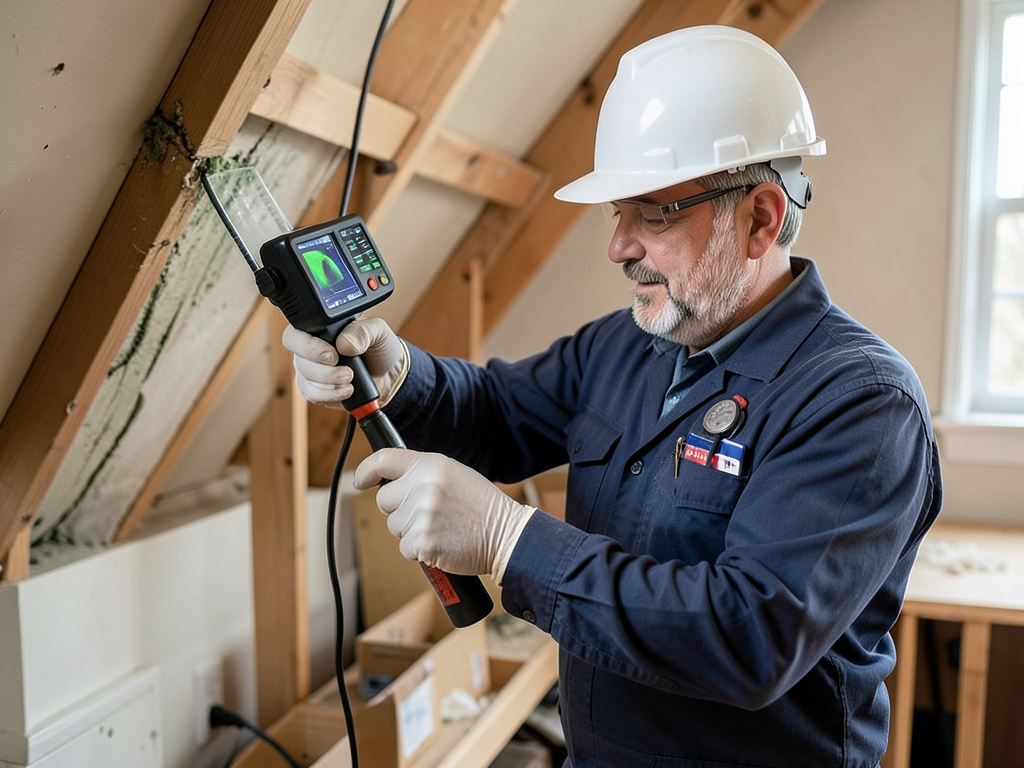
Our technicians wear full PPE including N95 respirators and disposable Tyvek suits. This protects them and prevents cross-contamination as they move between containment zones and clean areas. We document every step with thermal imaging and moisture readings. Insurance adjusters need this data to process claims quickly.

Rapid mold containment services include source water extraction if flooding caused the problem. Standing water feeds mold growth. We remove it with truck-mounted extractors, then apply antimicrobial treatments to affected surfaces. Containment buys time for proper remediation planning, but only if executed within the first 24 to 48 hours after discovery.

What Happens When You Call for Emergency Containment

Emergency Mold Containment in Birmingham – Immediate Response Teams Deployed in Under 90 Minutes
01

Immediate Dispatch and Assessment

You call our emergency line and speak with a dispatcher, not a voicemail system. We collect basic information about the contamination location, visible mold extent, and any water damage. A two-person containment team leaves our facility within 30 minutes. They arrive with portable negative air machines, containment barriers, moisture meters, and documentation equipment. The first site visit takes 20 to 40 minutes as technicians map the affected area and identify all potential spread pathways.
02

Containment Zone Construction

Technicians seal off the contaminated area using six-mil polyethylene sheeting anchored with ZIP System tape or equivalent. All air vents get covered and sealed. HEPA air scrubbers start running at maximum CFM to create negative pressure. We verify pressure differentials with manometers to confirm air flows inward. This containment construction takes 45 to 90 minutes depending on room size and complexity. All porous materials showing visible growth get bagged in six-mil poly and sealed for disposal.
03

Monitoring and Handoff

Air scrubbers run continuously for 24 to 72 hours during containment. We monitor humidity levels and negative air pressure every four hours. Our technicians photograph containment zones and document moisture readings for your insurance claim. Once the area is stabilized and isolated, we coordinate with certified mold remediators or proceed with full abatement if you authorize the work. You receive a containment report with thermal images, moisture maps, and recommended next steps within 24 hours of initial service.

Why Birmingham Property Owners Choose Grand Water Damage Restoration Birmingham

Mold containment is time-sensitive work. You need a team that answers the phone at 2 AM and arrives before sunrise. We maintain three fully-equipped response vehicles in Birmingham so at least one unit stays available for emergency dispatch 24 hours a day.

Our technicians train specifically on Birmingham's building stock. The city's pre-1950 homes in Southside and Avondale have plaster walls and balloon framing that allow mold to spread vertically through wall cavities. Newer construction in Hoover and Vestavia Hills uses modern moisture barriers, but mold still exploits any gap in building envelope integrity. We adapt containment strategies to match your property's construction type.

Local knowledge matters when coordinating with insurance adjusters. We work with every major carrier operating in Jefferson County. Our documentation meets Alabama Department of Insurance requirements for emergency mitigation claims. You get itemized estimates and photo evidence that adjusters approve without endless back-and-forth negotiations.

Commercial clients value our capacity to scale operations quickly. We handled emergency mold containment for a 40,000-square-foot Birmingham distribution center after a sprinkler malfunction. Our team deployed eight air scrubbers and constructed containment barriers across three shipping bays while normal operations continued in the office areas. The client lost zero days of productivity.

We understand that mold contamination creates anxiety. You worry about health effects, repair costs, and whether your home will ever feel clean again. Our containment work stops the immediate threat while giving you time to make informed decisions about full remediation. You are not rushed into expensive contracts while your property is in crisis mode. We stabilize the situation first, then walk you through options with transparent pricing and realistic timelines.

What Emergency Mold Containment Includes

Response Time and Availability

Our emergency dispatch center operates every day of the year with no seasonal closures. You call (659) 234-8188 and speak with a live person who can deploy a containment team immediately. Average response time runs 60 to 90 minutes from initial call to on-site arrival for Birmingham and surrounding communities. We maintain emergency equipment inventory including backup air scrubbers, generators for properties without power, and moisture detection tools. Night and weekend calls receive the same priority as weekday requests. Our containment crews work in two-person teams minimum to ensure safe handling of contaminated materials and proper containment construction.

Initial Property Assessment

Technicians arrive with thermal imaging cameras that detect moisture inside wall cavities where mold often hides. We use pin-type and pinless moisture meters to map water intrusion patterns across floors, walls, and ceilings. You receive a verbal assessment within 30 minutes of arrival explaining contamination extent, likely causes, and containment scope. We identify all HVAC pathways, plumbing chases, and structural openings where spores could migrate. This assessment includes documentation with timestamped photos and moisture readings that insurance carriers require for claim processing. We never pressure you into immediate remediation contracts. The assessment gives you information needed to make informed decisions.

Containment Quality and Standards

We construct containment barriers following IICRC S520 mold remediation standards adapted for emergency response situations. All polyethylene barriers use six-mil thickness minimum with seams overlapped and sealed. HEPA air scrubbers filter air at 99.97 percent efficiency for particles down to 0.3 microns, which captures mold spores measuring 3 to 100 microns. We verify negative air pressure with calibrated manometers to confirm containment integrity. Contaminated materials get double-bagged in six-mil poly before transport. You receive a containment zone that prevents cross-contamination while buying time for proper remediation planning. The containment remains functional for 72 hours minimum with continuous air scrubber operation.

Documentation and Next Steps

You receive a written containment report within 24 hours including thermal images, moisture content readings, contamination extent maps, and recommended remediation scope. This documentation satisfies insurance carrier requirements for emergency mitigation coverage. We provide referrals to certified mold testing laboratories if you need air quality sampling for health concerns or legal purposes. Our team coordinates with your insurance adjuster to schedule follow-up inspections and remediation work. We explain the difference between containment and full remediation so you understand what happens next. If you authorize complete mold abatement, we provide detailed estimates with line-item pricing before starting any additional work.

Frequently Asked Questions

You Have Questions,
We Have Answers

What is the proper containment for mold? +

Proper mold containment requires physical barriers and negative air pressure to prevent spore spread. Professionals seal the affected area with 6-mil polyethylene sheeting, creating an airtight workspace. HEPA-filtered negative air machines pull contaminated air outside, preventing cross-contamination to clean zones. All HVAC systems must be shut down to stop spore circulation. In Birmingham's humid climate, containment is critical because airborne mold spreads rapidly through ductwork and porous materials. Technicians use airlocks for entry and exit, wearing full PPE. This prevents microscopic spores from reaching your living spaces during remediation. Do not attempt containment yourself. Call a certified professional immediately.

What plant removes 78% of airborne mold? +

The English Ivy plant removes approximately 78% of airborne mold spores within 12 hours, according to research. While this sounds promising for Birmingham homeowners battling humidity-related mold, plants alone cannot solve an active infestation. Visible mold growth requires professional containment and removal. English Ivy helps reduce ambient spore counts in clean areas but does nothing to address the moisture source fueling growth. If you see mold, you need emergency remediation, not houseplants. Birmingham's year-round humidity creates ideal conditions for rapid spread. Use plants as prevention in dry areas, but trust certified professionals for remediation. Speed matters when containing active mold colonies.

Does FEMA pay for mold remediation? +

FEMA rarely pays for mold remediation directly. They may cover temporary housing if mold results from a federally declared disaster, but cleanup costs typically fall on your homeowners insurance. In Birmingham, flood-related mold from severe storms might qualify if the disaster declaration includes your area. However, FEMA focuses on structural repairs, not secondary contamination like mold. Your best option is filing an insurance claim immediately after water damage occurs. Document everything with photos. Most policies cover mold if you act quickly to mitigate water intrusion. Delay voids coverage. Contact a certified restoration company that handles insurance paperwork for Birmingham residents.

Is mold an OSHA violation? +

Yes, mold exposure can constitute an OSHA violation in workplaces. Employers must protect workers from hazardous conditions, including toxic mold species like Stachybotrys. OSHA requires proper ventilation, PPE, and containment protocols when employees face mold exposure. In Birmingham commercial properties, high humidity creates persistent mold risks. If you discover mold at your business, you must address it immediately to avoid liability and compliance issues. Employees can report unsafe conditions. OSHA does not set specific mold exposure limits but enforces general duty clauses requiring safe work environments. Document remediation efforts. Hire certified professionals to ensure code compliance and protect your workforce.

How do Japanese bathrooms not get mold? +

Japanese bathrooms resist mold through superior ventilation, quick-drying materials, and daily maintenance habits. They use integrated exhaust fans that run continuously, removing moisture before condensation forms. Surfaces are non-porous tile or resin panels that dry fast. Most importantly, Japanese households squeegee walls and floors after every shower. Birmingham's humidity makes this approach harder but not impossible. Install a powerful exhaust fan vented outside. Use mold-resistant paint and grout. Wipe surfaces dry daily. Leave doors open for airflow. If mold already exists, these habits will not fix it. You need professional containment first, then prevention strategies work.

What kills mold permanently? +

Nothing kills mold permanently if moisture remains. Professionals use EPA-registered antimicrobial agents and HEPA vacuuming to remove colonies, but mold returns if humidity exceeds 60% or leaks persist. In Birmingham, where summer humidity stays high, controlling moisture is harder than killing spores. After containment and removal, you must fix the water source. That means repairing roof leaks, improving ventilation, or installing dehumidifiers. Bleach only whitens surfaces temporarily without penetrating porous materials. Professional-grade enzymes break down organic matter mold feeds on. Encapsulation sealers prevent regrowth on treated surfaces. Permanent solutions require eliminating moisture first, then proper remediation.

What pulls mold out of the air? +

HEPA air scrubbers pull mold spores from the air during professional remediation. These machines filter particles as small as 0.3 microns, capturing 99.97% of airborne contaminants. Activated carbon filters remove odors. In Birmingham homes, high humidity keeps spores airborne longer, making HEPA filtration critical during containment. Household air purifiers help maintain clean air after remediation but cannot replace professional equipment during active removal. Negative air machines create pressure differentials that prevent spore migration to clean areas. Do not rely on retail air purifiers to fix a mold problem. They reduce ambient spores but cannot address colonies growing inside walls or under flooring.

Is it true that English Ivy absorbs mold? +

Yes, English Ivy absorbs airborne mold spores through its leaves, reducing ambient contamination by up to 78% in controlled studies. However, this plant cannot remediate active mold growth in Birmingham homes. Ivy helps maintain air quality in clean spaces but does nothing for colonies spreading inside walls, crawlspaces, or HVAC systems. If you see visible mold, you need emergency containment, not houseplants. Birmingham's humidity creates conditions where mold spreads faster than any plant can filter spores. Use English Ivy as a preventive tool in dry areas after professional remediation. Address the moisture source first. Plants supplement prevention but never replace proper containment.

What plant is NASA recommend for air purifiers? +

NASA recommends the Peace Lily for air purification, noting its ability to remove benzene, formaldehyde, and trichloroethylene from indoor air. While Peace Lilies help reduce airborne toxins, they do not replace professional mold remediation. Birmingham homeowners facing active mold growth need certified containment services, not plants. NASA's research focused on sealed spacecraft environments, not humid Southern homes with active water damage. Peace Lilies require moist soil, which can create additional mold risks if overwatered. Use them in well-ventilated areas after remediation is complete. If you have visible mold, call a professional immediately. Plants improve air quality but cannot stop spreading colonies.

What to do if I can't afford mold removal? +

If you cannot afford full mold removal, prioritize containment to stop spread. Contact local Birmingham restoration companies and ask about payment plans or insurance claim assistance. Many work directly with insurers, requiring only your deductible upfront. Document everything with photos for potential claims. Small areas under 10 square feet might qualify for DIY removal using proper PPE and HEPA vacuums, but larger infestations need professionals. Some nonprofits offer emergency home repair assistance for low-income homeowners. Fix the moisture source first, even if remediation waits. Running dehumidifiers and improving ventilation slows growth. Delaying professional help worsens damage and costs. Seek multiple quotes and financing options immediately.

How Birmingham's Red Mountain Clay Soil Creates Basement Mold Emergencies

Birmingham sits on Coastal Plain clay that swells when saturated and shrinks during dry periods. This soil movement creates hydrostatic pressure against basement walls and foundation slabs. Older homes in Crestwood and Norwood lack modern waterproofing systems. Heavy spring rains or tropical storm remnants push water through foundation cracks and cove joints. You wake up to a wet basement and within 48 hours, mold colonies establish on drywall, carpet padding, and stored belongings. The clay soil does not drain water away from foundations like sandy or loamy soils. It holds moisture against your home's structure for days after rain stops. Emergency mold containment becomes necessary when that trapped water feeds rapid fungal growth in enclosed basement spaces.

Birmingham's residential building stock includes thousands of homes built before 1980 when modern mold-resistant materials became standard. These properties have organic-based drywall, paper-faced insulation, and wood framing that mold colonizes rapidly. Local contractors familiar with Birmingham's construction patterns understand where mold hides in these older structures. We work with local insurance agencies including State Farm and Allstate offices throughout Jefferson County. Our documentation meets Alabama-specific requirements for water damage and mold claims. Property owners in Birmingham need containment teams that respond fast and document thoroughly. Your insurance adjuster expects detailed photo evidence and moisture readings. We provide that documentation as part of standard emergency service because we process dozens of claims monthly through local carriers.

Water Damage Restoration Services in The Birmingham Area

Grand Water Damage Restoration is proud to serve the entire Birmingham area. Our convenient location ensures we can respond to your emergency needs with speed and efficiency. Whether you're a homeowner or business owner, we’re ready to bring our expertise directly to you. View our service area on the map to see how we can provide prompt, professional assistance and restore your property quickly and effectively.

Address:
Grand Water Damage Restoration Birmingham, 401 7th St N, Birmingham, AL, 35203

Additional Services We Offer

Our news updates

Latest Articles & News from The Blogs

Comparing Interior vs Exterior Waterproofing for Your Central Park Basement Living in Central Park means dealing with Birmingham’s heavy rainfall…

Comparing Interior vs Exterior Waterproofing for Your Central Park Basement

Comparing Interior vs Exterior Waterproofing for Your Central Park Basement Living in Central Park means dealing with Birmingham’s heavy rainfall…

Keeping Your Rising West Princeton Home Theater Dry and Mold Free

Keeping Your Rising West Princeton Home Theater Dry and Mold Free Birmingham’s humid subtropical climate creates unique challenges for home…

How High Humidity and Birmingham Pollen Create the Perfect Storm for Attic Mold in Airport Highlands

How High Humidity and Birmingham Pollen Create the Perfect Storm for Attic Mold in Airport Highlands Airport Highlands homeowners face…

Contact Us

Mold colonies double in size every 24 hours. Call (659) 234-8188 right now for immediate dispatch. Our containment crews arrive in 90 minutes or less with equipment ready to isolate contaminated areas. Do not wait until tomorrow. Every hour increases damage and remediation costs.